TOPIC: Ending Negative Cycles and Improving Communication in Relationships: How Emotionally Focused Therapy (EFT) Helps Couples
WRITTEN: July 17, 2026 by Ashlee Park
WILL BE REVIEWED: July 2029
Relationships can sometimes feel like a dance where two people are moving to different rhythms. Even couples who deeply love each other may find themselves stuck in repeated arguments, feeling misunderstood, disconnected, or unable to communicate their needs effectively.
When conflict becomes a pattern, many couples begin to wonder: Why do we keep having the same arguments? Why do I feel unheard? How can we reconnect?
Emotionally Focused Therapy (EFT) is an evidence-based couples therapy approach that helps partners understand these patterns, rebuild emotional connection, and create healthier communication. At JCACounseling, our couples therapists help partners identify negative cycles, strengthen their bond, and develop tools for a more secure and supportive relationship.
What Is Emotionally Focused Therapy (EFT)?
Emotionally Focused Therapy (EFT) is a research-supported therapy approach based on attachment theory. Developed to help couples improve emotional connection, EFT focuses on understanding the deeper emotions and needs underneath relationship conflicts.
Rather than focusing only on the surface-level disagreement, EFT helps couples explore questions like:
- What happens emotionally when conflict begins?
- What does each partner need to feel loved, valued, and understood?
- How can couples respond to each other with greater compassion and connection?
EFT can be used in couples therapy, family therapy, and individual therapy, but it is especially well known for helping couples improve communication and strengthen emotional intimacy.
How Attachment Styles Affect Relationships
Attachment theory explains how our early relationships and emotional experiences can influence the way we connect with others as adults. These experiences can shape how we respond during moments of conflict, stress, or vulnerability.
Common attachment styles include:
Secure Attachment
Individuals with secure attachment are often comfortable with emotional closeness, trust, vulnerability, and healthy communication.
Anxious Attachment
Individuals with anxious attachment may fear rejection or abandonment and may seek reassurance when they feel disconnected. During conflict, they may become the partner who pursues communication more urgently.
Avoidant Attachment
Individuals with avoidant attachment may feel uncomfortable with vulnerability or intense emotions. During conflict, they may withdraw, shut down, or create emotional distance.
Disorganized Attachment
Disorganized attachment can develop from inconsistent or traumatic experiences and may involve a combination of anxious and avoidant responses.
In many couples experiencing ongoing conflict, one partner may become the “pursuer” while the other becomes the “withdrawer.” Over time, this pattern can create emotional distance and leave both partners feeling hurt and misunderstood.
Understanding the Negative Relationship Cycle
One of the main goals of EFT couples therapy is helping partners identify their negative interaction cycle.
A typical cycle may look like this:
- A trigger occurs
A comment, action, or situation causes one partner to feel emotionally threatened or disconnected. - A deeper emotion appears
The partner may feel rejected, lonely, unimportant, or afraid of losing the relationship. - A protective reaction develops
Instead of expressing the deeper feeling, the person may criticize, become angry, defend themselves, or withdraw. - The cycle repeats
The other partner reacts to that behavior, creating another trigger and continuing the pattern.
Many couples are not fighting because they do not care about each other. They are often caught in a cycle where both partners are trying to protect themselves while longing for connection.
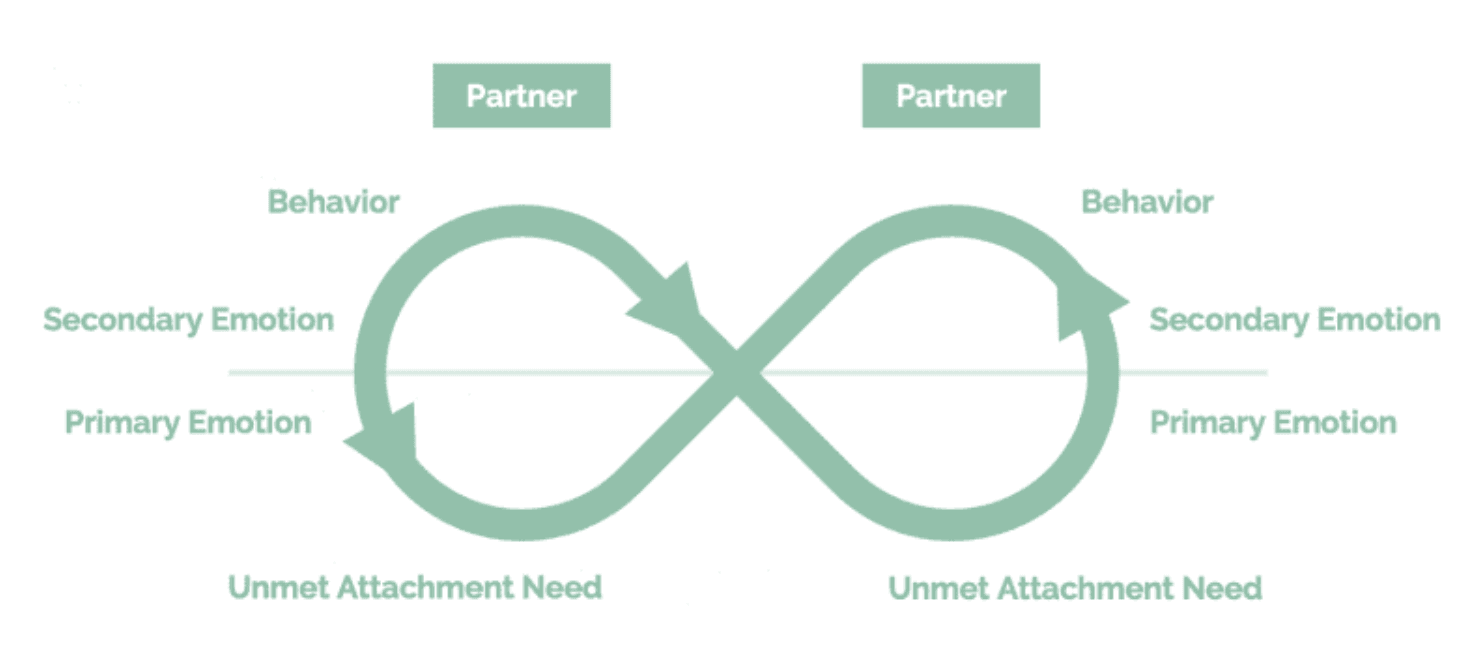
Couples Negative Relationship Cycle
How Emotionally Focused Therapy Helps Couples Reconnect
In EFT couples therapy, therapists help partners slow down conflict patterns and better understand what is happening beneath the argument.
Couples learn to:
- Recognize unhealthy communication patterns
- Identify underlying emotions and attachment needs
- Express vulnerability instead of relying on defensive reactions
- Listen and respond with greater empathy
- Create a stronger emotional connection
A key part of EFT is helping each partner communicate their deeper needs. Instead of saying, “You never listen to me,” a partner may learn to express, “I feel alone and I need to know that I matter to you.”
This shift allows couples to move from blame and defensiveness toward understanding and connection.
EFT Couples Therapy: More Than Finding Who Is Right
Many couples begin therapy expecting the therapist to act as a referee and decide who is right or wrong. EFT takes a different approach.
The goal is not to determine who is at fault. Instead, EFT helps both partners understand their experiences, feel heard, and work together to rebuild trust and emotional safety.
Every relationship has difficult moments. Learning how to navigate those moments with honesty, compassion, and vulnerability can create a stronger partnership.
Is Emotionally Focused Therapy Right for Your Relationship?
Emotionally Focused Therapy can help couples who are experiencing:
- Frequent arguments or recurring conflicts
- Communication difficulties
- Emotional distance
- Trust issues
- Relationship transitions
- Difficulty expressing needs
- A desire to strengthen their connection
At JCACounseling, our couples therapists provide supportive, evidence-based relationship counseling for couples looking to improve communication and build a healthier connection.
If you are looking for couples therapy in Alpharetta, GA, or online couples counseling throughout Georgia, our team is here to help you take the next step.
Frequently Asked Questions About EFT Couples Therapy
What is Emotionally Focused Therapy for couples?
EFT is a couples therapy approach that helps partners understand emotional patterns, improve communication, and strengthen their attachment bond.
Can EFT help couples who argue frequently?
Yes. EFT helps couples identify the negative cycle behind repeated arguments and develop healthier ways to respond to one another.
Does couples therapy only help relationships in crisis?
No. Many couples seek therapy to strengthen communication, improve connection, and build a stronger foundation before problems become more serious.
How do I find an EFT couples therapist near me?
A licensed couples therapist trained in evidence-based approaches like EFT can help you understand relationship patterns and work toward meaningful change.
Begin Building a Stronger Connection
Relationships require vulnerability, communication, and a willingness to understand one another. With the right support, couples can move beyond painful cycles and create a relationship built on trust, connection, and emotional security.
At JCACounseling, we believe healing happens through connection.